Chia Chi Kao, MD

Procedures · Breast

Shape, position and support, planned together

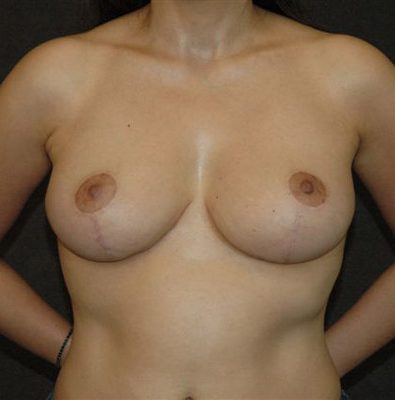
Breast surgery at Kao Plastic Surgery begins with an examination, not a size. Dr. Kao assesses tissue, skin quality, nipple position, chest width and the degree of sagging before recommending implants, a lift, fat transfer or a combination. The aim is a breast that looks natural for the frame and holds its shape over time.

How Dr. Kao approaches it

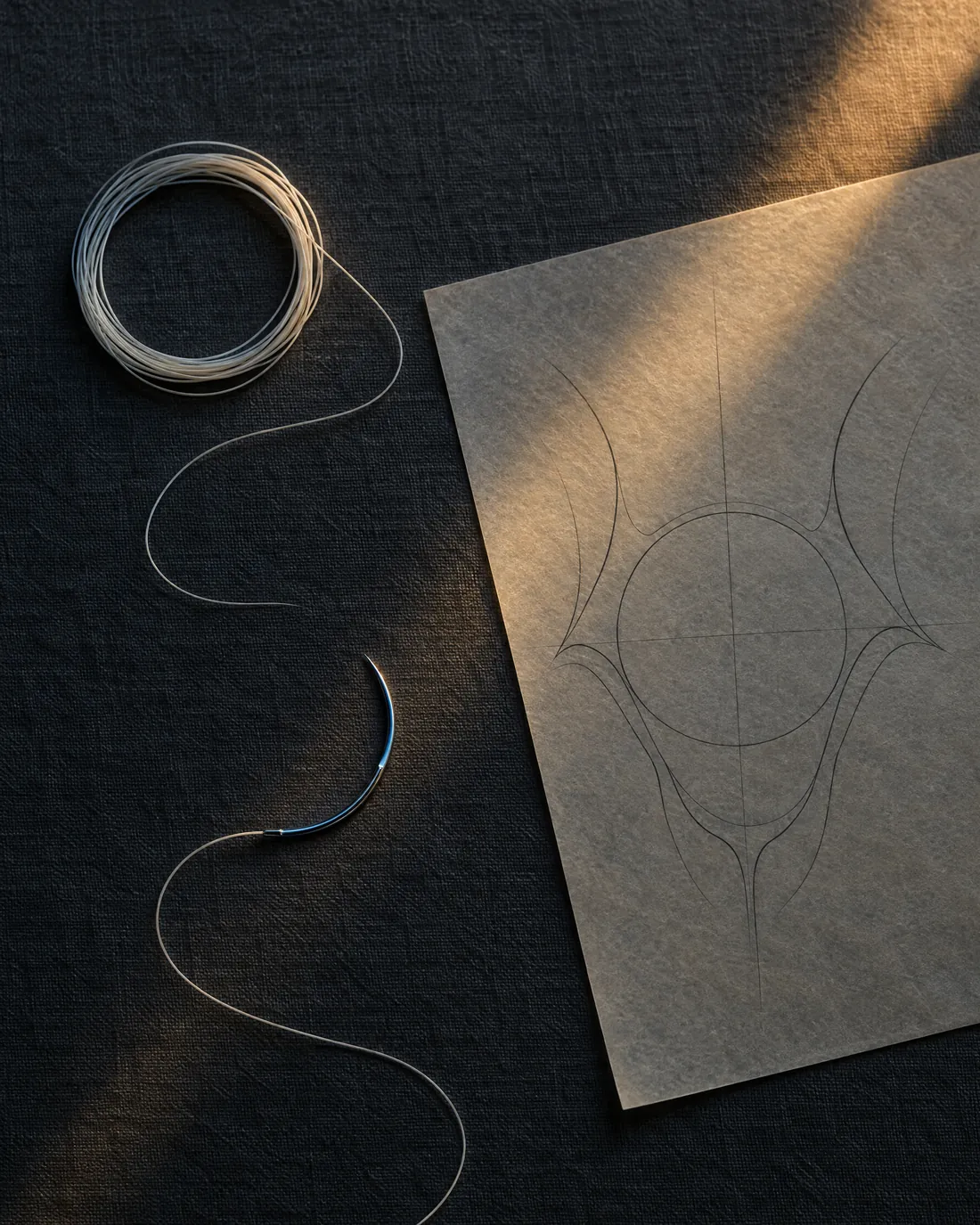
Scars planned around the areola
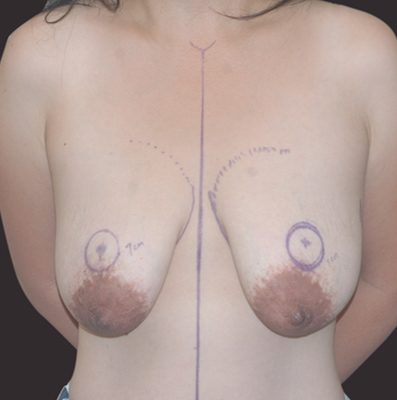
Where anatomy allows, Dr. Kao works through the border of the areola, where the change in skin color helps a fine scar blend. He has refined the circumareolar breast lift over many years and uses it to reposition the nipple and reshape the breast while keeping the areola round. When a periareolar incision is used for augmentation, he goes around the breast tissue rather than through it to create the implant pocket.
Internal support rather than skin tension alone
For heavier breasts or more advanced sagging, Dr. Kao can shape the breast tissue internally in an inverted-T pattern while the skin incision stays around the areola. A supportive internal layer, described by the practice as an internal bra, can be added to reinforce the lower breast. His Alexandra Breast Lift™ is a hybrid of these methods.
The technique follows the anatomy
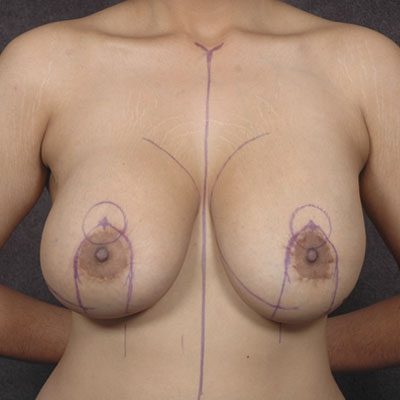
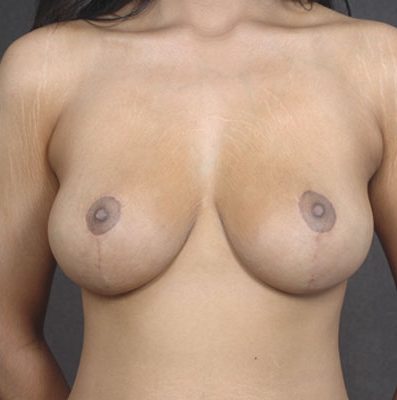
A shorter scar is not chosen at the expense of shape. When an anchor-pattern lift or reduction gives the better result, Dr. Kao uses it and closes the inverted-T incision in five layers of sutures to control tension on the lower wound. Implant type, profile, placement and incision are selected for each patient.
Reconstruction planned before mastectomy
Dr. Kao's view is that a good reconstruction comes from a good mastectomy. When possible he joins the planning before surgery and works with the surgical oncologist on incision placement, preserving skin and sparing the nipple when it is oncologically safe.

Breast Augmentation

Implants selected and placed to add volume and improve shape in proportion to the patient's frame.

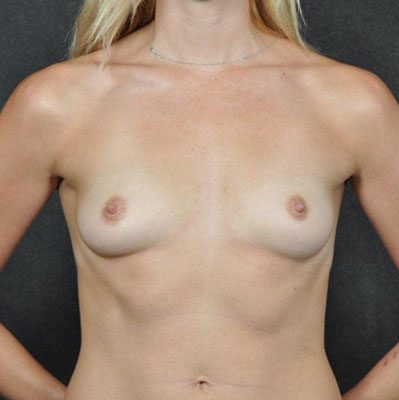
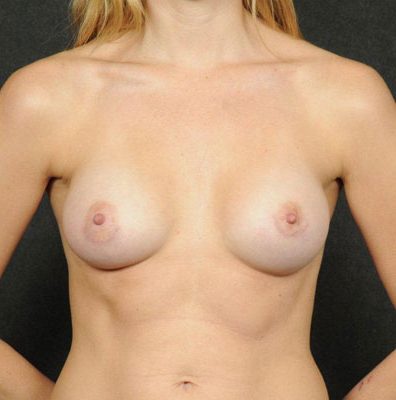
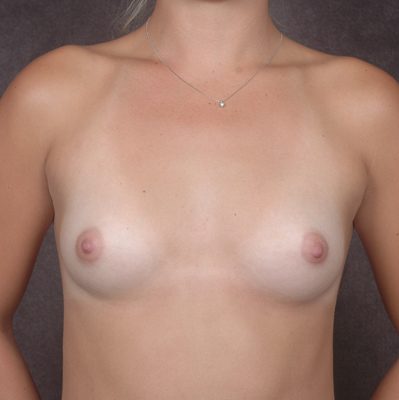
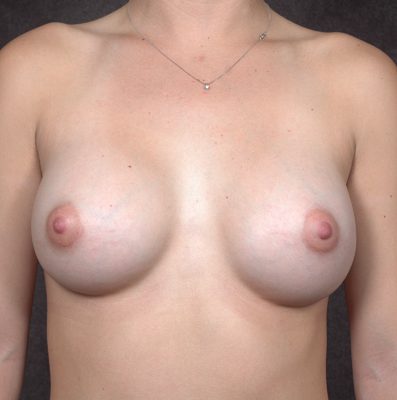
Augmentation adds volume to breasts that are naturally small, have deflated after pregnancy or breastfeeding, or have changed with age or weight. The goal is a balanced, natural-looking breast rather than size for its own sake.

Dr. Kao weighs breast tissue, chest width, skin quality, nipple position and the patient's goals before recommending implant type, shape, incision and pocket. He makes small adjustments in implant size or position between sides when the breasts are slightly asymmetric.

When there is meaningful sagging, implants alone may not be enough. In that case he discusses combining augmentation with a lift.

Often suited to

  • Naturally small breasts
  • Volume loss after pregnancy or breastfeeding
  • Deflation or asymmetry with age or weight change

Technique

  • Silicone or saline implants, round or anatomic; Dr. Kao favors anatomic implants with a low vertical height when the chest wall is wide and the breast is short
  • Incision options: periareolar (his preference for most augmentations), inframammary, or endoscopic transaxillary
  • Placement: subglandular, submuscular or dual plane, chosen by tissue thickness and desired contour
  • A complete anesthetic block of the chest wall at the end of surgery to ease early discomfort, typically lasting about eight hours

Recovery Bruising, swelling and tightness are expected, and discomfort is managed with oral medication. Most patients return to work after about one week and resume exercise after about four weeks. Swelling largely settles by about six weeks, and the breasts continue to soften over the following months. Patients may recover at the KO'AN Recovery Center.

Breast Lift (Mastopexy)

Reshaping and raising breasts that have kept their volume but lost their position.

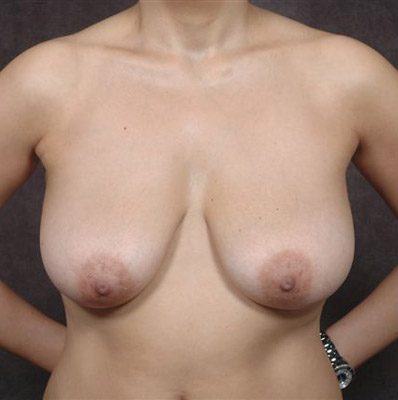
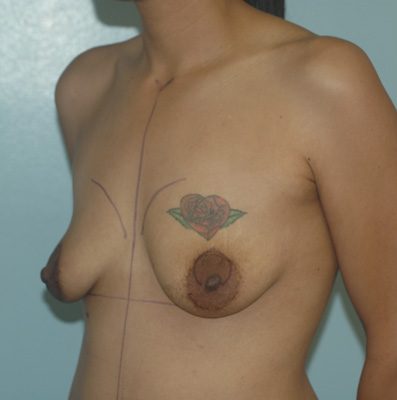
A breast lift removes excess skin, reshapes the breast tissue and moves the nipple and areola to a higher position. It suits women whose breasts have descended after pregnancy, weight change or with age, without necessarily wanting them larger.

Dr. Kao grades the degree of sagging and chooses the technique from it. For many patients he prefers the circumareolar lift, with the incision at the edge of the areola. For very heavy breasts and advanced sagging he uses the inverted-T pattern, closed in five layers to limit scar stretching.

The areola can be reduced at the same time. For patients who dislike any scar at the areolar border, the practice offers areola tattooing to soften its appearance.

Often suited to

  • Sagging breasts with adequate volume
  • Nipples that sit low or point downward
  • Stretched or enlarged areolas

Technique

  • Circumareolar mastopexy: incision around the edge of the areola
  • Inverted-T (anchor) mastopexy for heavy tissue and advanced sagging, with five-layer closure
  • Outpatient surgery under sedation or general anesthesia
  • Optional areola reduction

Recovery Bruising, swelling and mild discomfort are expected, and a support garment may be worn. Most patients return to work after about one week and to exercise after about four weeks. Numbness and changes in nipple sensation are usually temporary. Major swelling subsides over about six weeks. The breasts continue to age naturally after a lift.

Breast Lift With Implants

A lift and an augmentation in one operation, for sagging breasts that also need volume.

When the breasts have descended and also lost fullness, a lift alone improves position but not volume. Adding an implant restores fullness while the lift reshapes the breast and raises the nipple.

Dr. Kao balances how much tissue is removed against the size of the implant. He generally performs the combined procedure through a circumareolar incision, which lets him position the nipple correctly rather than lowering the implant to meet it.

Often suited to

  • Sagging combined with volume loss
  • Changes after pregnancy, breastfeeding or weight loss

Technique

  • Circumareolar incision for the lift and implant placement
  • Implant size planned together with the amount of tissue removed

Recovery Recovery follows the lift and augmentation guidance: most patients return to work after about one week and resume exercise after about four weeks, with swelling settling over the following weeks.

Internal Bra Mastopexy and the Alexandra Breast Lift™

A lift that reshapes and supports the breast from within while keeping the skin incision around the areola.

This technique is for women who need more lift than a simple circumareolar procedure can give but do not want the anchor scar of an inverted-T lift. Through an incision around the areola, Dr. Kao separates the skin from the breast tissue and shapes the tissue internally in an inverted-T pattern.

Where appropriate, an acellular dermal matrix is placed as an internal bra. It attaches to the chest wall, reinforces the lower breast and is gradually incorporated into the patient's own tissue.

Dr. Kao developed the Alexandra Breast Lift™, named after the patient who asked for it, as a hybrid of the circumareolar and internal inverted-T methods. It can be performed with or without implants. Severe sagging, very thin skin or poor elasticity may be better served by another lift.

Often suited to

  • Mild to moderate sagging with good skin quality
  • Breasts too heavy for a simple circumareolar lift
  • Patients who want to avoid an external anchor scar
  • Selected cases after implant removal or with bottoming out

Technique

  • External circumareolar incision with internal inverted-T shaping
  • Acellular dermal matrix as internal support, when appropriate
  • Outpatient surgery under propofol sedation or general anesthesia
  • Drains for about five to seven days

Recovery Swelling, bruising and tightness are expected. Many patients return to work after about one week and resume exercise at about four weeks. Major swelling improves within about six weeks, and the shape refines over several months.

Breast Reduction

Removing excess tissue, fat and skin to make the breasts lighter, lifted and proportionate.

Reduction relieves the weight of large breasts, which can contribute to neck, back and shoulder strain, bra-strap grooves and skin irritation. It also lifts the breast and repositions the nipple and areola.

Dr. Kao treats reduction as sculpting the tissue that remains, not only removing tissue, so the breast does not look flat or boxy. Each side can be reduced differently to improve asymmetry. Fullness toward the underarm can be refined with liposuction or direct excision.

Often suited to

  • Heavy breasts causing physical discomfort
  • Breasts out of proportion to the frame
  • Asymmetry or a low nipple position

Technique

  • Inverted-T (anchor) incision for larger reductions, with layered closure
  • Vertical (lollipop) incision for selected moderate reductions
  • Nipple and areola repositioning, with areola reduction when needed
  • Liposuction of the side breast and underarm when indicated
  • Outpatient surgery

Recovery Swelling, bruising and soreness are expected, and a surgical or soft non-underwire bra is worn. Many patients return to desk work in one to two weeks and resume fuller activity around four to six weeks with Dr. Kao's approval. Symptom relief varies from patient to patient.

Breast Implant Revision

Correcting the size, position, feel or complications of a previous augmentation.

Revision addresses implants that are the wrong size, have hardened, rippled, ruptured or moved. Dr. Kao first identifies the cause, then plans the repair, which may be an exchange, capsule surgery, pocket repair, a lift or fat transfer.

When capsular contracture requires a capsulectomy, he removes the scar capsule without removing breast tissue. Implants that have drifted together are held apart with sutures along the inner pocket. Implants that have dropped are supported by reconstructing the breast fold. Where possible he works through the original incisions.

Often suited to

  • Dissatisfaction with implant size or shape
  • Capsular contracture, rupture or rippling
  • Bottoming out, double-bubble or symmastia

Technique

  • Implant exchange, including saline to silicone for rippling
  • Capsulotomy or capsulectomy
  • Pocket repair and inframammary fold reconstruction
  • Previous incisions reused when possible

Recovery Recovery depends on the extent of correction. Patients rest upright for several days. More involved revisions typically mean about two weeks away from work, with exercise resuming at four to six weeks. Some conditions, such as capsular contracture, can recur.

Implant Removal With Breast Lift

Removing implants and reshaping the natural breast so it does not look deflated.

After implants are removed, the skin and tissue they stretched may not contract back. A lift in the same operation reshapes the remaining breast and raises the nipple and areola.

Dr. Kao decides on capsule removal, the lift pattern and any fat transfer from the condition of the capsule, the skin and the patient's goals. Patients with small implants, good elasticity and little sagging may not need a lift.

Often suited to

  • Implants that no longer suit the patient
  • Sagging or deflation expected after removal
  • Capsular contracture or implant complications

Technique

  • Removal through the original incision when possible
  • Partial or complete capsulectomy as indicated
  • Circumareolar or inverted-T lift depending on laxity
  • Optional fat transfer for subtle volume

Recovery Many patients return to desk work within one to two weeks and resume fuller activity around four to six weeks with approval. The breasts will be smaller once implant volume is gone.

Breast Enhancement With Fat Transfer

A modest, natural increase in fullness using the patient's own purified fat.

Fat is taken by liposuction from areas such as the abdomen, flanks, hips or thighs, purified and placed in the breast in small layers. The result is a subtle change, generally about one cup size, rather than the volume an implant provides.

Dr. Kao processes the fat by centrifugation and filtration to remove oil, blood and damaged cells, a refined graft he calls Super Fat. Fat transfer is also used to soften implant edges, smooth rippling and restore contour after implant removal.

Some transferred fat is absorbed during healing, and more than one session may be needed.

Often suited to

  • A subtle increase without implants
  • Mild asymmetry
  • Contour after implant removal
  • Sufficient donor fat

Technique

  • Liposuction from selected donor areas
  • Fat purified by centrifugation and filtration
  • Micro-injection in thin layers
  • Outpatient surgery through small access points

Recovery Swelling and bruising affect both breasts and donor areas, and a compression garment may be worn. Most patients return to work in one to two weeks and resume exercise at four to six weeks. Final results appear at about three to six months.

Breast Reconstruction and Mastectomy Planning

Rebuilding the breast after cancer surgery or preventive mastectomy, planned with the breast surgeon from the start.

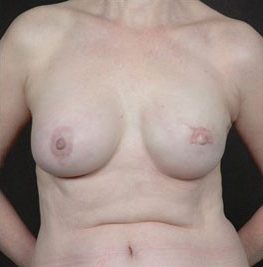
Dr. Kao prefers to be involved before mastectomy. He holds an extensive consultation, works with the surgical oncologist on the incision, and is often in the operating room to keep the incision small and preserve skin. When the nipple is free of cancer, he favors a nipple-sparing mastectomy and repositions the nipple higher, refining it later with a modified circumareolar technique.

One of his preferred approaches is implant-based reconstruction combined with fat grafting, which softens implant edges and improves contour. Options also include tissue expanders, direct-to-implant reconstruction, a latissimus dorsi flap, and nipple and areola reconstruction with tattooing. For abdominal flaps that need microsurgery, he may coordinate with another specialist.

Reconstruction is often staged. Some patients choose not to reconstruct, and that choice is respected.

Often suited to

  • Planned or completed mastectomy
  • Preventive mastectomy, including for genetic risk
  • Contour changes after lumpectomy
  • Revision of a previous reconstruction

Technique

  • Coordination with the surgical oncologist on incision and skin preservation
  • Nipple-sparing mastectomy when oncologically sound
  • Tissue expander or direct-to-implant reconstruction with fat grafting
  • Latissimus dorsi flap for selected complex cases
  • Surgery at Providence Saint John's or a private surgery center

Recovery Recovery depends on the method. After expander or implant reconstruction, some patients return to light activity within about two weeks. Flap reconstruction takes longer because the donor site also heals. Sensation after reconstruction varies.

Questions

Will I need a lift as well as implants?

It depends on skin elasticity, nipple position and the degree of sagging. Dr. Kao assesses these at consultation. If implants alone would leave the breast heavy or unsupported, he will recommend combining augmentation with a lift.

Can a breast lift be done without an anchor scar?

In selected patients, yes. The circumareolar lift and the internal bra mastopexy keep the skin incision around the areola. Severe sagging, very thin skin or poor elasticity may still call for an inverted-T lift, which gives a better shape in those cases. Every lift leaves some scar.

What incision does Dr. Kao use for augmentation?

For most augmentations he prefers a fine incision along the lower border of the areola, creating the pocket around the breast tissue rather than through it. Inframammary and endoscopic transaxillary incisions are also offered when they suit the anatomy.

How long is recovery?

For augmentation and lift, most patients return to work after about one week and to exercise after about four weeks. Reduction, revision and implant removal with lift often take one to two weeks before desk work and four to six weeks before fuller activity. All patients may recover at the KO'AN Recovery Center.

When should I see Dr. Kao about reconstruction?

Ideally before mastectomy, so he can coordinate with your breast surgeon on incision placement, skin preservation and nipple-sparing options. Reconstruction can also be performed later.

Further reading from Dr. Kao

Every plan begins with an examination by Dr. Kao.

Request a private consultation

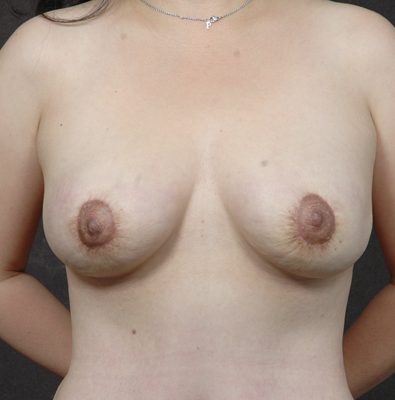
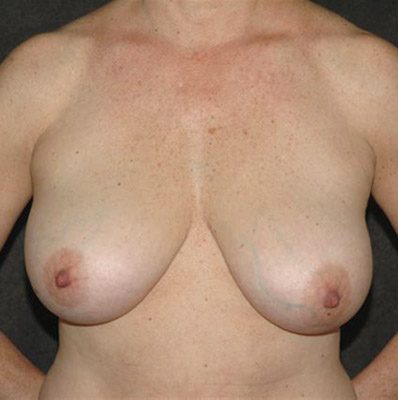
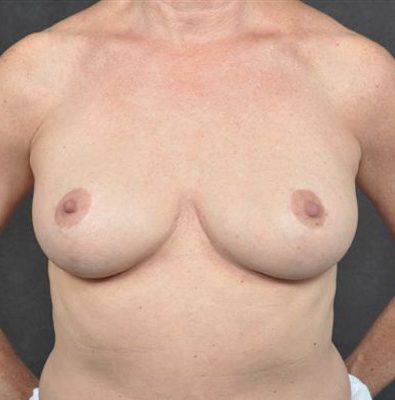
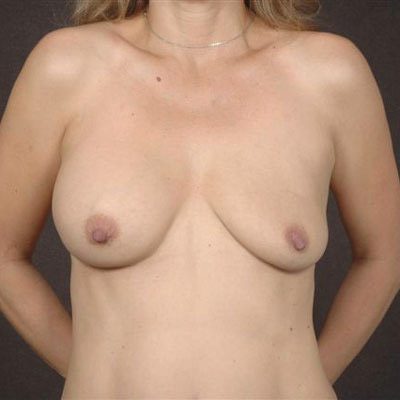
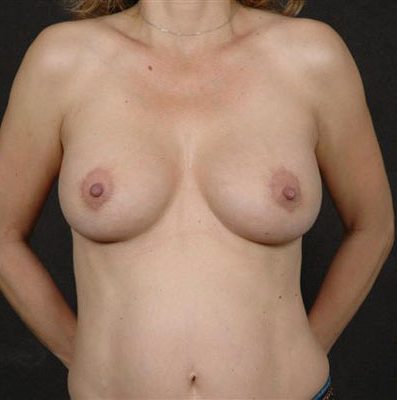
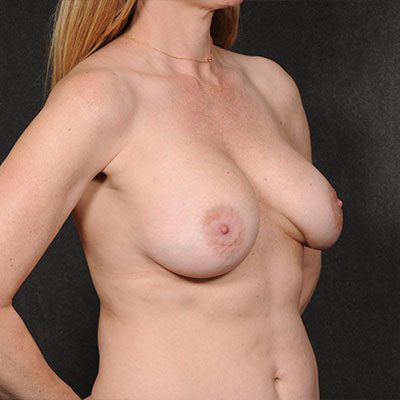
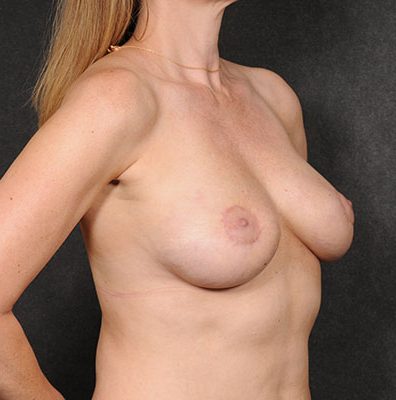
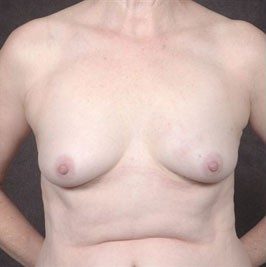
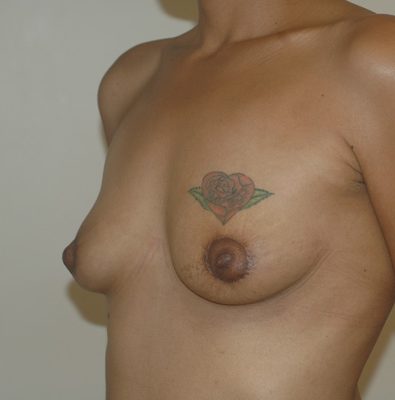
Before-and-after photographs are actual Dr. Kao patients; individual results vary. The other photographs are still lifes.